- +966 11 22 11 445
- enquiries@pangeamobility.com
- RIYADH | JEDDAH | DUBAI | EASTERN REGION

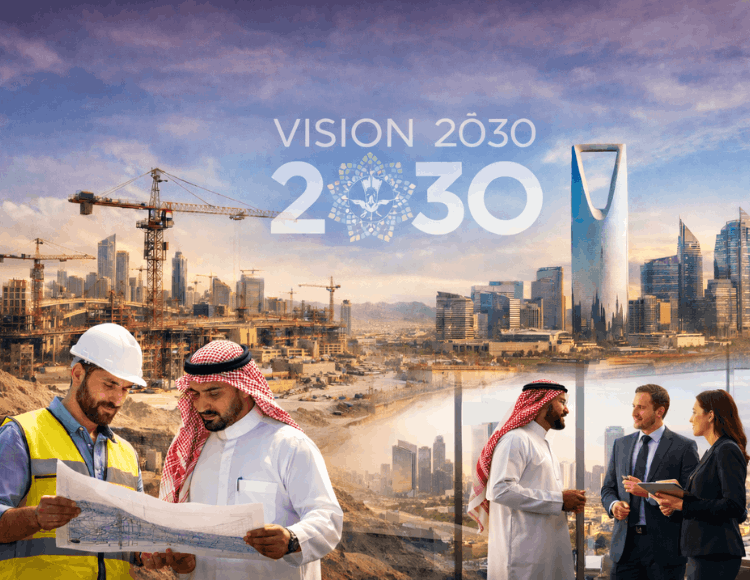
Foreign direct investment into the Kingdom hit USD 5.9 billion in the first quarter of 2025 alone, up 44% from the same period a year earlier. Multinationals are not just investing from a distance. They are physically relocating to Riyadh, setting up regional headquarters, and building long-term operational footprints in a market that did not look like this even three years ago.
The economic shift driving all of this is real and measurable. Non-oil GDP grew 4.9% in Q1 2025, the eighth quarter in a row where the non-oil economy outran the headline number. Government revenues outside of oil have more than doubled since 2016, reaching $137 billion. For a country historically dependent on a single commodity, that represents a fundamental change in how the economy is structured.
The workforce picture has shifted just as sharply. Unemployment sits at a historic low of 2.8%. Female workforce participation has nearly doubled since Vision 2030 launched, reaching 36.3%. The Saudi labour market today looks fundamentally different from the one that existed a decade ago, and the pace of change shows no signs of slowing.
For global organisations, this creates a significant and timely opportunity. But entering the Saudi market and successfully operating within it are two different things. Companies that move into the Kingdom quickly discover that deploying an international workforce involves far more than securing the right roles. It means understanding Saudi Arabia work visa requirements, Nitaqat Saudization quotas, Qiwa platform registration, Iqama residency permits, and a regulatory environment that continues to evolve as Vision 2030 accelerates.
Strategic Vision Behind Saudi Arabia’s Economic Transformation
Vision 2030 was introduced as a national roadmap to build a diversified, knowledge-driven economy supported by innovation, infrastructure development, and global investment.
The strategy focuses on several interconnected priorities:
economic diversification beyond oil
development of global investment and financial hubs
expansion of tourism and entertainment industries
growth of advanced technologies such as AI, fintech, and digital infrastructure
large-scale infrastructure and smart city development
Major initiatives such as NEOM, Red Sea Global, Qiddiya, Diriyah Gate, and the King Abdullah Financial District in Riyadh are attracting international investors, engineering firms, and technology companies.
Alongside these developments, Saudi Arabia has introduced policies encouraging global corporations to establish regional headquarters in Riyadh, a move designed to consolidate the Kingdom’s role as the primary commercial gateway to the Gulf region.
These developments are significantly increasing cross-border recruitment and international talent mobility.
Rising Demand for International Talent
Saudi Arabia’s workforce remains highly international. The Kingdom employs over 18 million workers, with expatriates representing a significant proportion of the labour market.
International professionals play an essential role across sectors such as engineering, construction, technology, healthcare, and renewable energy. As Vision 2030 projects expand, demand for specialised talent continues to increase.
Companies across Europe, Asia, and the Gulf region are relocating engineers, consultants, digital specialists, and project teams to Saudi Arabia to support infrastructure development and emerging industries.
For many organisations, international talent mobility has become a strategic component of project delivery and market expansion.
Labour Reforms Supporting Workforce Mobility
Saudi Arabia has introduced several labour reforms aimed at modernising its employment environment and improving mobility for foreign professionals.
Recent policy changes have introduced greater flexibility within the employment system and improved transparency in employer–employee relationships. The government has also strengthened labour governance through measures such as digital employment contract verification, wage protection monitoring, and centralised labour documentation systems.
Employment contracts are now commonly registered through platforms such as Qiwa, ensuring proper documentation and compliance with labour regulations.
These reforms are gradually aligning Saudi Arabia’s labour framework with international employment standards, making the Kingdom increasingly attractive for global professionals.
Digital Platforms Transforming Immigration Management
Digital transformation is a key element of Vision 2030, particularly in government services.
Saudi Arabia has developed an integrated digital ecosystem connecting labour and immigration systems through platforms including Qiwa, Absher, and Muqeem.
These systems enable employers to manage processes such as employment contract registration, work permit and residency applications, employee transfers, exit and re-entry visas, and workforce compliance monitoring.
For multinational organisations managing expatriate workforces, these digital tools provide greater transparency while enabling more efficient workforce mobility management.
Saudization and Workforce Planning
While attracting international expertise, Saudi Arabia is also prioritising the development of its domestic workforce through Saudization (Nitaqat) policies.
These programmes encourage companies to increase employment opportunities for Saudi nationals while still utilising international expertise in specialised roles.
For international companies, workforce planning must therefore balance two priorities: recruiting global talent for specialised projects while maintaining compliance with Saudization workforce ratios.
Companies that successfully align their hiring strategies with these requirements are better positioned to maintain access to labour services and visa sponsorship.
Mega-Projects and the Global Talent Shift Toward Saudi Arabia
Vision 2030’s mega-projects represent some of the largest infrastructure developments in the world.
Projects such as NEOM, The Line, Red Sea Global, and Diriyah Gate require significant numbers of international engineers, architects, project managers, and digital specialists.
At the same time, Saudi Arabia is investing heavily in emerging sectors including artificial intelligence, renewable energy, tourism, and fintech. These investments are creating new opportunities for international professionals across multiple industries.
As a result, Saudi Arabia is becoming an increasingly important destination for global talent mobility.
The Importance of Workforce Mobility Strategy
Relocating international professionals to Saudi Arabia now requires careful planning across several regulatory areas. Companies must coordinate visa sponsorship, document legalisation, employment contract compliance, Saudization ratios, and payroll governance.
Organisations that treat workforce mobility as a strategic function rather than an administrative task are better positioned to deploy talent efficiently while maintaining compliance.
For companies participating in major infrastructure or technology projects, immigration planning often begins months before project deployment.
Opportunities for Global Businesses
For international organisations, Vision 2030 represents a significant opportunity to expand into one of the fastest-growing economies in the Middle East.
Companies entering the Saudi market can benefit from:
Access to large-scale government infrastructure projects
Growing technology and innovation ecosystems
Regional headquarters incentives
Expanding tourism and entertainment sectors
However, deploying international professionals into Saudi Arabia requires careful coordination of immigration procedures, employment compliance, document legalisation, and workforce mobility planning.
Organisations that develop structured mobility strategies are better positioned to operate successfully in the Kingdom’s evolving regulatory environment.
Navigating Workforce Mobility in the Vision 2030 Era
Saudi Arabia’s transformation is creating unprecedented opportunities for global companies and professionals. However, relocating international talent into the Kingdom requires careful coordination of immigration procedures, labour compliance, and workforce planning.
Understanding how Vision 2030 policies influence employment governance, visa sponsorship, and workforce mobility is essential for organisations expanding into the Saudi market.
Pangea Mobility supports international businesses and professionals with Saudi work visa processing, document legalisation, immigration compliance, and workforce mobility solutions, helping organisations relocate talent to Saudi Arabia smoothly, efficiently, and in full compliance with local regulations.